The most recent AutoWeek magazine (see www.autoweek.com) has a news flash in it regarding the fastest road-registered car. The record for nearly seven years had been the almighty McLaren F1 at 240.1 mph. Most people didn't think it would be beaten, except possibly by the upcoming Bugatti Veyron (see http://www.bugatti-cars.com/bugatti/index.html). In fact, many in the industry did NOT expect the Veyron to beat that number, because although it should have the power to do so (987 hp and 938 lb-ft of torque from a quad (!!!) turbo, 64 valve, 8.0 liter W-16 engine), the company has been having aerodynamic difficulties in addition to problems finding a tire company to build a 250 mph tire. Therefore, the latest news was the company had dropped its target top speed from the 250 originally quoted to a 'more modest' 230 mph. In that case, obviously, the McLaren's record would be safe. However, the news in AutoWeek claims that a German Porsche tuner company, 9ff (see http://www.9ff.de/Englisch-htm/home-eng.htm), last December set a new record at the Nardo track in Italy. AutoWeek claims the new time is 241.1 mph, while the company's website claims 243 mph. Either way it is crazy, crazy fast, especially coming from the car it did. The car was...? You guessed it, my favorite car, the Porsche 911 GT2. Here are some numbers from the tuned GT2: 3.8 (up from stock 3.6) liter twin-turbo inline six; 828 horsepower (!!!) at 7200 rpm; 649 lb-ft of torque at 6450; 2860 pound curb weight. That translates to a 3.5 power-weight ratio, which would put it in a third place tie on my power-weight ratio chart (behind the F50GT (see Post below), the ME412 (see Post below), and tied with the McLaren F1 LM version. Good sweet gracious. The German company says they are planning on building up to 20 cars at $400,000 a pop. Pretty crazy. I'll take two please.
Friday, February 04, 2005


Possible cars to buy:
So, I have been looking at a couple different (used) cars that very well might be my next car purchase. I have found a handful that I like, some more likely than others. Here they are, in no particular order:
1994 Ford Taurus SHO:
four door sedan
front-wheel drive
3.0 V6
220 horsepower
5-speed manual
71k miles
$6k
1995 Lexus SC300:
two door coupe
rear-wheel drive
3.0 V6
215 horsepower (I think)--BUT, see earlier Post regarding dream-car SC/Supra swap
5-speed manual
87k miles (but remember the 2JZ-GTE swap)
$11,000
2003 Subaru Impreza WRX
four door sedan (or wagon)
all-wheel drive
2.0 turbocharged inline four
227 horsepower
5-speed manual
31-32k miles
$17,000
2001 Audi A4 Quattro
four door sedan (or wagon)
all-wheel drive
1.8 turbocharged inline four
170 horsepower (stock, but see earlier Post regarding the 1.8T in the Passat)
5-speed manual
33-37k miles
$17,000
Now a little explanation:
The SHO was my very first car, so that has a special place in my heart. It was first produced for MY 1989, and at the time was really quite a rocket. It had a Yamaha 3.0 V6 engine that produced 220 horsepower, and had a 7000 rpm redline. I went the fastest I have ever gone (top speed) in a 1993 model (146 mph (indicated)). I had a ton of fun in that car, and the handling was quite impressive. I had upgraded it with Eibach springs, Koni Sport struts, anti-roll bars, 18-inch wheels and 225/45 Michelin Pilot Sports. The thing stuck like glue. There is a corner out on a country road that has a 35 mph sign for it. One night I took the 35 mph corner at 90 mph and the car didn't lose traction or even squeal it's tires. My record for a 25 mph on-ramp to a freeway is 72 mph. The thing was pretty impressive. However, the thing was a nightmare in terms of maintenance, as I spent a small (not so small actually) fortune on repairing various things on it. Plus, the parts are astronomically expensive (think German car parts pricing on a Ford). So this is really more of a dream, than a really viable option. However, someday when I am making decent money, I would love to have a (relatively) low mileage 1993-95 Ford Taurus SHO with a 5-speed manual in my garage.
The Lexus we have talked about earlier. It is a great car right off the bat, with a nice inline-six cylinder and 5-speed manual transmission. It is rear wheel drive (as all proper sports cars should be), and comes with Toyota reliability. I have seen many cars advertised with between 150,000 and 200,000 miles on them. The thing, if taken care of, will run forever. Plus, (and this is the primary reason I am interested in it) you can swap the Supra drivetrain into it and it will bolt right up. That is 'bolting right up' 320 horsepower and a six-speed manual. Not to mention the Supra 2JZ-GTE is one of (if not THE) most tunable engine on the market. Again, I would recommend seeing an earlier Post for the some of the potential that this engine has. This is actually a relatively realistic car because it has relatively low miles (for a Toyota), and is a lot closer to a price range that I will hopefully be able to afford within the next couple of years.
The Subaru is a great little car. I have seen stock 0-60mph times of 5.5 seconds, with a top end of around 150mph. This engine (EJ20) is also incredibly tunable. I have seen a cat-back system alone improve horsepower (at the wheels) to a dyno-proven increase of 15 horsepower (nearly 20 horsepower at the crank). A further indication of its potential is the myriad of tuners that have coaxed more than 300 horsepower from this car, with no internal modifications, and only a handful of external ones. On a side note, I recently looked at a website that boasts both a 580 and a 600 horsepower WRX (see www.airpowersystems.com for more information). Some modifications I would like to do to a WRX if I were to get one include: turbo-back exhaust (probably a Greddy, but possibly a HKS or B&B (see www.bbtriflo.com)); lightened flywheel; Exedy clutch; blow off valve; AEM (see www.aempower.com form more information) EMS engine management; turbo timer and APS front mount intercooler to start. This is a somewhat realistic car as you can get one with pretty low miles (less than 40k) for less than $17k. Some drawbacks of it are its 'boy-racer' looks, only average interior quality, and a less than stellar shifter.
The Audi would probably be the most realistic alternative. This would be a great car. It would be practical (wagon body style), sporty (turbocharged inline four), and the interior quality of Audi vehicles has been claimed by many automobile magazines to be the best in the business. I have also previously Posted about the 1.8T engine. This is a great platform to build off of. Although it only comes stock with 170 horsepower, it has a great deal more potential (even if not as much as the WRX or SC). I would first put a front mount intercooler on it (probably either an ABD Racing (see www.abdracing.com) or APR (see www.goapr.com)); turbo back exhaust; at least an APR or GIAC (see www.giacusa.com) chip, but possibly a full APR kit (APR's Stage III kit puts out 280 horsepower). I would prefer a wagon, however, Shelle doesn't particularly like how the wagon looks, so it might have to be a sedan. The definite plus of a sedan is it comes with 110 pounds LESS curb weight than the wagon, which would help with the power-weight ratio tremendously. You can find a 2000-2002 A4 with the 1.8T and a manual and Quattro (all-wheel drive) with less then 40,000 miles for less than $17,000. This very well might be the next car in the Kuzma garage (assuming there is ANY new car in the garage).
Well, those are what I am looking at right now. All would be good choices, but the Audi is probably at the top of the list at the moment.
1994 Ford Taurus SHO:
four door sedan
front-wheel drive
3.0 V6
220 horsepower
5-speed manual
71k miles
$6k
1995 Lexus SC300:
two door coupe
rear-wheel drive
3.0 V6
215 horsepower (I think)--BUT, see earlier Post regarding dream-car SC/Supra swap
5-speed manual
87k miles (but remember the 2JZ-GTE swap)
$11,000
2003 Subaru Impreza WRX
four door sedan (or wagon)
all-wheel drive
2.0 turbocharged inline four
227 horsepower
5-speed manual
31-32k miles
$17,000
2001 Audi A4 Quattro
four door sedan (or wagon)
all-wheel drive
1.8 turbocharged inline four
170 horsepower (stock, but see earlier Post regarding the 1.8T in the Passat)
5-speed manual
33-37k miles
$17,000
Now a little explanation:
The SHO was my very first car, so that has a special place in my heart. It was first produced for MY 1989, and at the time was really quite a rocket. It had a Yamaha 3.0 V6 engine that produced 220 horsepower, and had a 7000 rpm redline. I went the fastest I have ever gone (top speed) in a 1993 model (146 mph (indicated)). I had a ton of fun in that car, and the handling was quite impressive. I had upgraded it with Eibach springs, Koni Sport struts, anti-roll bars, 18-inch wheels and 225/45 Michelin Pilot Sports. The thing stuck like glue. There is a corner out on a country road that has a 35 mph sign for it. One night I took the 35 mph corner at 90 mph and the car didn't lose traction or even squeal it's tires. My record for a 25 mph on-ramp to a freeway is 72 mph. The thing was pretty impressive. However, the thing was a nightmare in terms of maintenance, as I spent a small (not so small actually) fortune on repairing various things on it. Plus, the parts are astronomically expensive (think German car parts pricing on a Ford). So this is really more of a dream, than a really viable option. However, someday when I am making decent money, I would love to have a (relatively) low mileage 1993-95 Ford Taurus SHO with a 5-speed manual in my garage.
The Lexus we have talked about earlier. It is a great car right off the bat, with a nice inline-six cylinder and 5-speed manual transmission. It is rear wheel drive (as all proper sports cars should be), and comes with Toyota reliability. I have seen many cars advertised with between 150,000 and 200,000 miles on them. The thing, if taken care of, will run forever. Plus, (and this is the primary reason I am interested in it) you can swap the Supra drivetrain into it and it will bolt right up. That is 'bolting right up' 320 horsepower and a six-speed manual. Not to mention the Supra 2JZ-GTE is one of (if not THE) most tunable engine on the market. Again, I would recommend seeing an earlier Post for the some of the potential that this engine has. This is actually a relatively realistic car because it has relatively low miles (for a Toyota), and is a lot closer to a price range that I will hopefully be able to afford within the next couple of years.
The Subaru is a great little car. I have seen stock 0-60mph times of 5.5 seconds, with a top end of around 150mph. This engine (EJ20) is also incredibly tunable. I have seen a cat-back system alone improve horsepower (at the wheels) to a dyno-proven increase of 15 horsepower (nearly 20 horsepower at the crank). A further indication of its potential is the myriad of tuners that have coaxed more than 300 horsepower from this car, with no internal modifications, and only a handful of external ones. On a side note, I recently looked at a website that boasts both a 580 and a 600 horsepower WRX (see www.airpowersystems.com for more information). Some modifications I would like to do to a WRX if I were to get one include: turbo-back exhaust (probably a Greddy, but possibly a HKS or B&B (see www.bbtriflo.com)); lightened flywheel; Exedy clutch; blow off valve; AEM (see www.aempower.com form more information) EMS engine management; turbo timer and APS front mount intercooler to start. This is a somewhat realistic car as you can get one with pretty low miles (less than 40k) for less than $17k. Some drawbacks of it are its 'boy-racer' looks, only average interior quality, and a less than stellar shifter.
The Audi would probably be the most realistic alternative. This would be a great car. It would be practical (wagon body style), sporty (turbocharged inline four), and the interior quality of Audi vehicles has been claimed by many automobile magazines to be the best in the business. I have also previously Posted about the 1.8T engine. This is a great platform to build off of. Although it only comes stock with 170 horsepower, it has a great deal more potential (even if not as much as the WRX or SC). I would first put a front mount intercooler on it (probably either an ABD Racing (see www.abdracing.com) or APR (see www.goapr.com)); turbo back exhaust; at least an APR or GIAC (see www.giacusa.com) chip, but possibly a full APR kit (APR's Stage III kit puts out 280 horsepower). I would prefer a wagon, however, Shelle doesn't particularly like how the wagon looks, so it might have to be a sedan. The definite plus of a sedan is it comes with 110 pounds LESS curb weight than the wagon, which would help with the power-weight ratio tremendously. You can find a 2000-2002 A4 with the 1.8T and a manual and Quattro (all-wheel drive) with less then 40,000 miles for less than $17,000. This very well might be the next car in the Kuzma garage (assuming there is ANY new car in the garage).
Well, those are what I am looking at right now. All would be good choices, but the Audi is probably at the top of the list at the moment.
Wednesday, December 01, 2004
Nathan's and my trip to the Porsche dealer.
Sorry it has been a while since I posted anything. A couple of my friends were giving me grief about not having posted for a while, so here it goes... I figure the middle of my International Law class, the last week of classes, is the perfect time to work on my blog.
My friend, Nathan who I believe I have mentioned on this blog before, came to visit for Thanksgiving. I got up to pick him up from the airport at 6am, and we decided that there was no better time to go see a Fayence Yellow Carrera GT than then...plus it was only an hour drive out of our way. So off we went to Paramount Porsche in Hickory, North Carolina. Pictures from our journey are posted below.
The car was absolutely gorgeous: sleek, low, short, wide, and very sexy. The single hub wheels were very trick (see picture below), and the "negligee" (as Porsche calls it) over the engine compartment was very cool as well. The shifter was on the dash (much like the current-generation Honda Civic Si). It was very cool to see a $480,000 (asking price) car up close and in person.
Another car we found there was a customer car that apparently was there for service or some other reason. It was a 911 Turbo. However, the owner had inexplicably put a badge on the back that says "Turbo GT". Now, you know how I feel about misnomer automobile badges (see earlier Post). I think it is almost unforgivable on a Porsche. In my opinion, a Porsche has two options: (1) the badge that comes on the car from the factory, or (2) the "model designation delete" option from the factory (no badge). The owner had done some interesting things to the car, however: first, he had a GT2 rear wing on it; second, he had a roll bar inside it--interestingly, he had a camera mount on the rollbar, so he can take movies with his camcorder on track days...I'd love to see those; he had some sort of aftermarket front end; he had a Recaro seat (driver's side only); and lastly he had the PCCB (Porsche's carbon-metallic brakes). This was a pretty cool car. I'd be interested to know if he had done anything to the engine. Nathan and I actually had a little trouble figuring out if it was a Turbo or a GT2. We tried to look under the car's front end to see if the front wheels were being driven (thus making it a Turbo), but the car was too low to see. Finally, I noticed that there were "back seats", conclusively showing it was a Turbo and not a GT2. But it was really difficult to know with the GT2 rear spoiler and the PCCB.
Well there you have it. Our trip this last November 21 to Paramount Porsche. Quite an enjoyable experience. Don't forget to look at the pictures below.
My friend, Nathan who I believe I have mentioned on this blog before, came to visit for Thanksgiving. I got up to pick him up from the airport at 6am, and we decided that there was no better time to go see a Fayence Yellow Carrera GT than then...plus it was only an hour drive out of our way. So off we went to Paramount Porsche in Hickory, North Carolina. Pictures from our journey are posted below.
The car was absolutely gorgeous: sleek, low, short, wide, and very sexy. The single hub wheels were very trick (see picture below), and the "negligee" (as Porsche calls it) over the engine compartment was very cool as well. The shifter was on the dash (much like the current-generation Honda Civic Si). It was very cool to see a $480,000 (asking price) car up close and in person.
Another car we found there was a customer car that apparently was there for service or some other reason. It was a 911 Turbo. However, the owner had inexplicably put a badge on the back that says "Turbo GT". Now, you know how I feel about misnomer automobile badges (see earlier Post). I think it is almost unforgivable on a Porsche. In my opinion, a Porsche has two options: (1) the badge that comes on the car from the factory, or (2) the "model designation delete" option from the factory (no badge). The owner had done some interesting things to the car, however: first, he had a GT2 rear wing on it; second, he had a roll bar inside it--interestingly, he had a camera mount on the rollbar, so he can take movies with his camcorder on track days...I'd love to see those; he had some sort of aftermarket front end; he had a Recaro seat (driver's side only); and lastly he had the PCCB (Porsche's carbon-metallic brakes). This was a pretty cool car. I'd be interested to know if he had done anything to the engine. Nathan and I actually had a little trouble figuring out if it was a Turbo or a GT2. We tried to look under the car's front end to see if the front wheels were being driven (thus making it a Turbo), but the car was too low to see. Finally, I noticed that there were "back seats", conclusively showing it was a Turbo and not a GT2. But it was really difficult to know with the GT2 rear spoiler and the PCCB.
Well there you have it. Our trip this last November 21 to Paramount Porsche. Quite an enjoyable experience. Don't forget to look at the pictures below.
c.jpg)

b.jpg)
b.jpg)
d.jpg)
.jpg)
Tuesday, November 02, 2004
V12 powered Range?
So, I saw the kid with the Range Rover with a V12 on the back again this morning. I almost asked him about it, but I didn't. My passion about this seemingly trivial matter made me query: What is it about this that bothers me so much? I can't really come up with a clear answer, but it has to do with people trying to mislead others, to do with poseurs, to do with people who want recognition without earning it.
There is a number of things that I have seen along these lines that bother me quite a bit. Some of them are:
- M badges on normal 3-series;
- M badges on normal 5-series;
- DOHC badges on single-cam Hondas;
- Vtec badges on non-Vtec Hondas;
- Type R badges on either (1) non-ITRs, or (2) cars that aren't even Integras [Civics, Accords, etc. (that are not available in Type R trim in the U.S.)]
- Z28 badges on 6-cylinder Camaros
- SS badges on Z28s or 6-cylinder Camaros
- and maybe the one that pisses me off the most--Cobra emblems on (1) Mustang GTs, or even worse (2) 6-cylinder Mustangs
- oh yeah, one that I saw at the gym just the other day--a B6 Audi A4 (not an S4) with the 1.8T engine (!!!) with a RS4 badge on the back; this is wrong on so many levels. To start it was a freaking A4, not an S4. It had a freaking 4-cylinder, not even a 6-cylinder, let alone the 4.2L 8-cylinder that the B6 S4 has. And maybe most importantly THERE IS NO B6 RS4 (even in Europe--there has never been one (even the B5) in the U.S.). This guy might be an even bigger idiot than the V12 Range Rover kid. Close call, though.
Anyway, that is my rant for today. I may get up the sack to ask the kid why he has a V12 badge on his SUV someday, we'll see.
There is a number of things that I have seen along these lines that bother me quite a bit. Some of them are:
- M badges on normal 3-series;
- M badges on normal 5-series;
- DOHC badges on single-cam Hondas;
- Vtec badges on non-Vtec Hondas;
- Type R badges on either (1) non-ITRs, or (2) cars that aren't even Integras [Civics, Accords, etc. (that are not available in Type R trim in the U.S.)]
- Z28 badges on 6-cylinder Camaros
- SS badges on Z28s or 6-cylinder Camaros
- and maybe the one that pisses me off the most--Cobra emblems on (1) Mustang GTs, or even worse (2) 6-cylinder Mustangs
- oh yeah, one that I saw at the gym just the other day--a B6 Audi A4 (not an S4) with the 1.8T engine (!!!) with a RS4 badge on the back; this is wrong on so many levels. To start it was a freaking A4, not an S4. It had a freaking 4-cylinder, not even a 6-cylinder, let alone the 4.2L 8-cylinder that the B6 S4 has. And maybe most importantly THERE IS NO B6 RS4 (even in Europe--there has never been one (even the B5) in the U.S.). This guy might be an even bigger idiot than the V12 Range Rover kid. Close call, though.
Anyway, that is my rant for today. I may get up the sack to ask the kid why he has a V12 badge on his SUV someday, we'll see.
Thursday, October 28, 2004
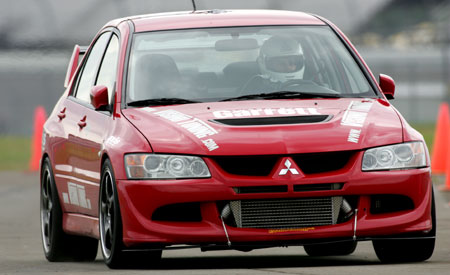
New Favorite Car?
Well, after seeing the HPA Motorsports R32 in the Car and Driver Supercar shootout, I may have changed my mind about it being one of my favorite cars. Somehow the price now is $82,000 (!!!), and the numbers C&D got were 0-60 in 3.6 seconds; 1/4 mile in 11.7 seconds at 119 mph. You'll recall that Motor Trend got 3.2 seconds, and 11.49 seconds at 120 mph. Also in Motor Trend, the quoted price was $59k; then if you look at HPA's website, it was $65k (see Post below); and now the as-tested price in Car and Driver is $82,000 (!!!). Furthermore, on the website, HPA is claiming 452 wheel horsepower and 495 wheel lb-ft of torque; however, in the Car and Driver article, they are only claiming 450 hp and 475 lb-ft BOTH numbers at the FLYWHEEL. Needless to say, this reduces the value/performance ratio a great deal. The actual performance numbers are a little disconcerting, but given track and weather variables, I can see the differences. However, the horsepower and torque numbers require some sort of explanation, of which I have none. The most disturbing thing for me is the price discrepancy. From $60,000 in the Motor Trend article, to $82,000 in the Car and Driver, is inexplicable. That is a 39% (!!!) increase in price. Furthermore, the dollar/horsepower ratio goes from $108/hp (in Motor Trend) to $182/hp in the Car and Driver article. That is a huge increase, and to me, unforgivable.
So, I may have changed over to a (tuned) Evo for my (relatively) reasonable supercar. Here are the numbers from the same C&D article for a (Vishnu) tuned Evo. That is looking closer to the HPA R32 I had in mind when I first heard about it.
$57,000
3217 lbs
475 (claimed) hp
450 (claimed) lb-ft of torque
power to weight ratio of 6.8
0-60: 3.4 seconds
1/4 mile: 11.6 seconds at 120 mph
However, here are some mods that can be done to an Evo, that it is reported should raise the performance significantly:
2005 Evo MR: $35,600
2005 Evo MR (with options/accessories I would like): $37,000
Mods:
AEM EMS (with UEGO): $2,235
HKS Blow-off Valve: $350
Greddy Cat-back exhaust (Titanium (10 lbs)): $885
B&B downpipe (3"): $330
AEM short ram: $210
Toda stroker engine kit (2.3L): $3100
HKS EVC Ver 2 (boost controller): $575
HKS turbo timer (Type-0): $90
With just the EMS, turbo-back exhaust, and boost controller, Easytrix Racing has seen around 320 whp. This translates to around 390 horsepower at the flywheel. I think with the intake and Toda kit we could easily see around 450 at the flywheel, not to mention a TON more torque because of the extra 326 cc's of displacement (an increase of over 17%). Furthermore, with the boost controller it would hold the boost at 19 psi all the way to redline (right now it drops off to 16 psi at the upper rpm range). I think that one could probably raise the boost controller and EMS to allow as much as 1.5 bars of boost (~22 psi), and furthermore to allow for 92 octane gas (as opposed to the 91 crap that is sold in California), and that would probably raise the horsepower to around 500 at the flywheel. This would also reduce the power to weight ratio to 6.4, which would be pretty impressive. As far as the turbo timer and BOV, those components would be more for safety and longevity than for power. After these mods, obviously the next step would be a larger intercooler and at that point in time, the stock turbo would probably be pretty much maxed out, so we would need to look at upgrading that. Then, the next logical step would be a set of cams. But for around $47,500 (with stock intercooler and stock turbo), you could have a 500 hp, all-wheel drive, 6-speed manual, great handling car that can seat three of your friends pretty comfortably. This would be around $106/hp.
Some other mods that I would probably want to do would be to get 17" SSR Competitions, a rear anti-roll bar (Hotchkis Tuning), a lightweight aluminum flywheel, and Exedy dual plate clutch. Furthermore, the $37,000 price quoted above includes front and rear strut tower braces. With these mods, it would turn a great car into a car that could run with supercars, both in terms of straightline acceleration, as well as handling on a road course. Not to mention, that the 4G63 engine is damn near indestructible, as well as having almost limitless tuning potential (in the last couple months I have seen two articles featuring Evos with 900+ WHEEL horsepower and 700+ WHEEL horsepower (on the bottle). It would be a pretty great little car for not TOO exorbitant a price, that would run with (literally) almost anything on the road. This may have replaced my HPA R32 as a favorite, "attainable" car. I haven't decided for sure, but I am leaning towards the Evo.
So, I may have changed over to a (tuned) Evo for my (relatively) reasonable supercar. Here are the numbers from the same C&D article for a (Vishnu) tuned Evo. That is looking closer to the HPA R32 I had in mind when I first heard about it.
$57,000
3217 lbs
475 (claimed) hp
450 (claimed) lb-ft of torque
power to weight ratio of 6.8
0-60: 3.4 seconds
1/4 mile: 11.6 seconds at 120 mph
However, here are some mods that can be done to an Evo, that it is reported should raise the performance significantly:
2005 Evo MR: $35,600
2005 Evo MR (with options/accessories I would like): $37,000
Mods:
AEM EMS (with UEGO): $2,235
HKS Blow-off Valve: $350
Greddy Cat-back exhaust (Titanium (10 lbs)): $885
B&B downpipe (3"): $330
AEM short ram: $210
Toda stroker engine kit (2.3L): $3100
HKS EVC Ver 2 (boost controller): $575
HKS turbo timer (Type-0): $90
With just the EMS, turbo-back exhaust, and boost controller, Easytrix Racing has seen around 320 whp. This translates to around 390 horsepower at the flywheel. I think with the intake and Toda kit we could easily see around 450 at the flywheel, not to mention a TON more torque because of the extra 326 cc's of displacement (an increase of over 17%). Furthermore, with the boost controller it would hold the boost at 19 psi all the way to redline (right now it drops off to 16 psi at the upper rpm range). I think that one could probably raise the boost controller and EMS to allow as much as 1.5 bars of boost (~22 psi), and furthermore to allow for 92 octane gas (as opposed to the 91 crap that is sold in California), and that would probably raise the horsepower to around 500 at the flywheel. This would also reduce the power to weight ratio to 6.4, which would be pretty impressive. As far as the turbo timer and BOV, those components would be more for safety and longevity than for power. After these mods, obviously the next step would be a larger intercooler and at that point in time, the stock turbo would probably be pretty much maxed out, so we would need to look at upgrading that. Then, the next logical step would be a set of cams. But for around $47,500 (with stock intercooler and stock turbo), you could have a 500 hp, all-wheel drive, 6-speed manual, great handling car that can seat three of your friends pretty comfortably. This would be around $106/hp.
Some other mods that I would probably want to do would be to get 17" SSR Competitions, a rear anti-roll bar (Hotchkis Tuning), a lightweight aluminum flywheel, and Exedy dual plate clutch. Furthermore, the $37,000 price quoted above includes front and rear strut tower braces. With these mods, it would turn a great car into a car that could run with supercars, both in terms of straightline acceleration, as well as handling on a road course. Not to mention, that the 4G63 engine is damn near indestructible, as well as having almost limitless tuning potential (in the last couple months I have seen two articles featuring Evos with 900+ WHEEL horsepower and 700+ WHEEL horsepower (on the bottle). It would be a pretty great little car for not TOO exorbitant a price, that would run with (literally) almost anything on the road. This may have replaced my HPA R32 as a favorite, "attainable" car. I haven't decided for sure, but I am leaning towards the Evo.
Tuesday, October 26, 2004
Freaking Idiots...
So, I have a little rant to go on here. Sometimes (often) I see some really interesting things at the (private) college I attend. This morning I saw something that proves that money can't buy brains. Some undergraduate kid was driving a brand new Range Rover ($90k), and on the back he had put a "V12" symbol. For those that don't know, the Range comes with a V-8, and no V-12 is optional. So, he took the time, and spent the money, to buy a V-12 badge (at least I think it was from a BMW, not a Benz (the Range has a BMW-sourced V-8)) and have it put on the back of his Range Rover THAT HAS A FREAKING V-8. What a freaking idiot. I almost said something to him at the coffee shop we were at...but I let it go (kind of). I thought I would just vent to you instead.
Saturday, October 23, 2004
Shelle's car.
As you will come to know, lightening a car is nearly as important to me as adding power components to the engine. This Post is going to be about potential lightening that can be done to my ex-fiance, Shelle's car. She has a 2000 Honda Civic EX sedan (with a 5-speed (or course)). It is a great little car. However, I do have long-term ideas for it, the main one being an Edelbrock turbo kit (dyno-proven to make 203 horsepower and 157 lb-ft of torque). However, even with that power (a huge increase from the stock 127 hp), her car will "only" have a power to weight ratio of about 12.7 (down from 19.8 stock). I put the quotes around the word only, because at 12.7, that will put her Civic AHEAD (better power to weight) of the SRT-4 (see Post below), the G35 sedan, the last M3 sedan (1998 model year), the ITR, a Mini Cooper S Works (200 hp), the WRX, the R32 and the B5 Audi S4. Not bad for a little SOHC four cylinder. However, with some lightening we can improve that number even more. Here is what I have in mind (all the numbers are really guess-work, but I think they are reasonable estimations):
- Carbon fiber hood and trunk: ~25 lbs (this swap removed 31 pounds from a SRT-4, but Shelle's car does not have the giant, gawdy wing)
- Carbon fiber (front) fenders: ~10 lbs (I figure if 25 lbs for hood and trunk, then 5 lbs per front fender is reasonable)
- dry cell battery: ~15 lbs (the switch to an Optima battery in an RX-7 was good for 16 lbs)
- aluminum flywheel and underdrive pulleys (alternator and power steering): ~10 lbs (an aluminum flywheel alone cuts 14 lbs off a G35)
- seats: ~50 lbs (this is a guess; the seats I am looking at (Sparcos) weigh 16 lbs each, and I figure that probably cuts 25 lbs off the OEM seats per side)
- wheels: ~60 lbs (the wheels themselves (16" SSR Competitions) should cut at least 2 lbs off the OEM steel wheels (14"); in addition the unsprung weight would be the equivalent of taking 56 lbs off the car; I rounded 64 down to 60)
- aluminum radiator (probably a Fluidyne, but possibly a Koyo, C&R, or PWR): ~10 lbs (this is probably the biggest guess of all these; I really don't know what the difference between the factory steel radiator is and an aluminum radiator)
- plastic fan (FAL): ~5 lbs (this is another guess, but I think that replacing both the stock metal (steel) shroud and fan, and replacing them with a plastic shroud and fan would easily drop 5 lbs; plus another cool thing is that the depth on this fan is only 1/2 that of the OEM fan, leaving more room in the engine bay for whatever you might need to put in there)
The grand total reduction would be in the neighborhood of 185 lbs. That is a really big chunk of weight and would reduce the Civics weight to below 2400 lbs. This loss alone would drop the power to weight ratio to 11.8. If you add to the turbo kit a camshaft and cat-back exhaust, it should be good for close to 220 hp, which would decrease the power to weight ratio to 10.9. For reference sake, that would tie or better the ratios for the NSX, the STi, the Dodge Ram SRT-10 Quad Cab (with the Viper engine), the 1995 RX-7; 350Z, 2004 (B6) S4, Porsche Cayenne Turbo, Mitsubishi Evolution RS, etc. Pretty impressive company for a four-door economy car.
A really great side effect of taking most of that weight off is that it should improve the weight distribution dramatically. Particularly, the flywheel, radiator, battery, carbon fiber hood, carbon fiber front fenders, and fan would all reduce the weight solely on the front axle, which would get the distribution closer to the 50/50 ideal, which in turn would improve handling.
Obviously this is all pie in the sky right now, but it is something that I am very interested in doing in the future.
- Carbon fiber hood and trunk: ~25 lbs (this swap removed 31 pounds from a SRT-4, but Shelle's car does not have the giant, gawdy wing)
- Carbon fiber (front) fenders: ~10 lbs (I figure if 25 lbs for hood and trunk, then 5 lbs per front fender is reasonable)
- dry cell battery: ~15 lbs (the switch to an Optima battery in an RX-7 was good for 16 lbs)
- aluminum flywheel and underdrive pulleys (alternator and power steering): ~10 lbs (an aluminum flywheel alone cuts 14 lbs off a G35)
- seats: ~50 lbs (this is a guess; the seats I am looking at (Sparcos) weigh 16 lbs each, and I figure that probably cuts 25 lbs off the OEM seats per side)
- wheels: ~60 lbs (the wheels themselves (16" SSR Competitions) should cut at least 2 lbs off the OEM steel wheels (14"); in addition the unsprung weight would be the equivalent of taking 56 lbs off the car; I rounded 64 down to 60)
- aluminum radiator (probably a Fluidyne, but possibly a Koyo, C&R, or PWR): ~10 lbs (this is probably the biggest guess of all these; I really don't know what the difference between the factory steel radiator is and an aluminum radiator)
- plastic fan (FAL): ~5 lbs (this is another guess, but I think that replacing both the stock metal (steel) shroud and fan, and replacing them with a plastic shroud and fan would easily drop 5 lbs; plus another cool thing is that the depth on this fan is only 1/2 that of the OEM fan, leaving more room in the engine bay for whatever you might need to put in there)
The grand total reduction would be in the neighborhood of 185 lbs. That is a really big chunk of weight and would reduce the Civics weight to below 2400 lbs. This loss alone would drop the power to weight ratio to 11.8. If you add to the turbo kit a camshaft and cat-back exhaust, it should be good for close to 220 hp, which would decrease the power to weight ratio to 10.9. For reference sake, that would tie or better the ratios for the NSX, the STi, the Dodge Ram SRT-10 Quad Cab (with the Viper engine), the 1995 RX-7; 350Z, 2004 (B6) S4, Porsche Cayenne Turbo, Mitsubishi Evolution RS, etc. Pretty impressive company for a four-door economy car.
A really great side effect of taking most of that weight off is that it should improve the weight distribution dramatically. Particularly, the flywheel, radiator, battery, carbon fiber hood, carbon fiber front fenders, and fan would all reduce the weight solely on the front axle, which would get the distribution closer to the 50/50 ideal, which in turn would improve handling.
Obviously this is all pie in the sky right now, but it is something that I am very interested in doing in the future.
Monday, October 11, 2004
Sportec SP700.
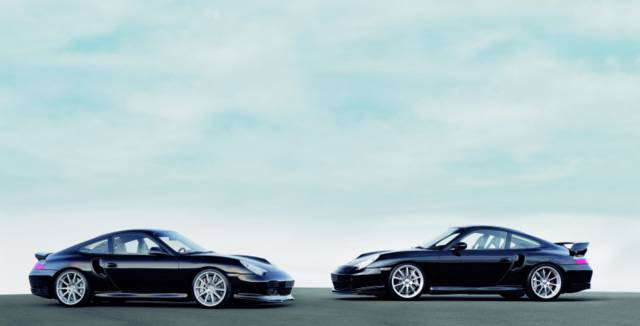
Sportec is a well-reputed Porsche tuner based in Germany. It also tunes Audis, with a notable example being the Sportec RS600--a 600hp version of the RS6. This Post, however, is about one of its craziest creations, the SP700. This is a modified Porsche 911 GT2 (remember my Display Name and the Post below?). As you probably guessed, the car makes 700hp (at 7100 rpms) and also 568 lb-ft of torque (at 4250 rpms). Factor in the stock GT2's curb weight of 3131, and you come up with a power to weight ratio of 4.5. That number, by the by, puts the SP700 6th place on my power to weight ratio list [behind the F50 GT (2.7), ME Four-Twelve (3.4), Autothority Stage IV Porsche 911 GT2 (4.2), Koenigsegg CCR (4.4), and tied with the almighty McClaren F1 (also 4.5)]. Now just think of ANY other road car you can imagine that I didn't just name, and the SP700 has a better power to weight ratio. ANY car. In case you were wondering what you do to a car that has 477 hp stock (2004 model) to increase that number by nearly 50%, you install a new ECU, new intercoolers, new turbos, titanium connecting rods (those little components might be the coolest mod in my opinion), new camshafts and more. The car has monster 19s (315/25 in the rear). Somehow the SP700 is able to defy the laws of physics and only slightly spins the tires when you rev it to 5k and drop the clutch. I still have a hard time believing that. Here are some performance numbers: 0-60 mph in 3.2 seconds; 0-100 in less than 7 seconds [you'll recall this puts it AHEAD of all three of the "supercars" from my earlier Post]; and Sportec claims a top speed of 217, which sounds completely realistic to me. Sam Mitani (R&T) wrote about this car, "Around town, the SP was a delight. At less extreme speeds, it was as comfortable and easy to drive as a stock 911." This is why I love Porsches. This is why Porsches are my favorite cars. Would you want to "live" with a 700hp Viper SRT-10? Would you want to "live" with a 700+ hp Ferrari? I don't think I would. And yet, this SP700 is completely civil and livable even though it puts up numbers that literally only a handful of cars in the world can match. Porsche knows how to make great cars. Oh yeah, the price for this Teutonic torpedo? $275,000.
I posted two pictures of Sportec Porsches below.
The link to the article where most of this information was gleaned from is below (also has some additional pics):
http://www.roadandtrack.com/article.asp?section_id=12&article_id=856&page_number=1
I posted two pictures of Sportec Porsches below.
The link to the article where most of this information was gleaned from is below (also has some additional pics):
http://www.roadandtrack.com/article.asp?section_id=12&article_id=856&page_number=1
Sunday, October 10, 2004

Saturday, October 09, 2004


The M5.
Well, for those that know me well, you knew it was just a matter of time before I dedicated a Post to the incredible M5. It has long been either near or sometimes at the top of my dreamcar list--my cars that I would most like to own. The E39 M5 (2000-2003) was quite a performer. BMW squeezed 394 hp (6,600 rpms) and 368 lb-ft of torque (3,800 rpms) out of the 5.0 V-8 engine. With a curb weight of 4,024 lbs, the M5 had a power to weight ratio of 10.2, not bad for a big four-door sedan that you could comfortably road trip with three other adults in. Furthermore, if your pockets were deep enough, you could take your M5 to Steve Dinan and he could coax 471 horsepower out of it (for a power to weight ratio of 8.5). An aside here: the E39's M5 engine is rumored to be going into the next-generation M3, which should strike fear in the hearts of all S4 and C55 owners (not to mention all the Porsche drivers in the ALMS's GT class).
All things, however, must come to an end, and the E39 M5 did so at the end of the 2003 model year. With the new E60 5-series, BMW (and particularly head designer, Chris Bangle) have made a lot of BMW-faithful very angry with the new cars polarizing styling. I happen not to mind it that much. It definitely is not an evolution of the E39, but a completely new styling direction. Only time will tell what the long-term results of the styling changes are. But today (or very soon at least) we get to enjoy one of the most-potent four-doors on the road. In fact, this is the first 10 cylinder engine BMW has made for a street car, and it is the most powerful engine, BMW has every put into a street car. And what an engine it is. BMW likes to draw attention to the connection between the M5's engine and that of the Williams F1 BMW. Obviously the similarities end pretty much beyond the number of cylinders, but nonetheless it will give well-heeled owners something more to impress their friends with. The new engine is only 3 cubic inches larger than the E39's in displacement, remaining at 5.0 liters. With lightened internals, and an extra two cylinders, however, the V-10 makes 500 hp (7,750 rpms) and 384 lb-ft of torque (6,100 rpms). This engine is able to hit the mythical 100hp/liter ratio, a rarified place indeed. The redline, by the way, is at an astronomical 8,250 rpms. In fact, the engine will tolerate short runs all the way to 8,500 rpms during full-throttle upshifts. Yes, one could call this motor high-strung. If you remember from the "Three Supercars" Post below, that redline is higher than the Ferrari Enzo's and only 150 shy of the Porsche's. Pretty impressive company.
How about some numbers:
2005 BMW M5
5.0 liter V-10
compression ratio: 12.0:1
redline: 8,250 rpms
front-engine, rear-wheel drive
7-speed SMG transmission
curb weight: 4035 lbs
500 hp
384 lb-ft of torque
power to weight: 8.1
0-60 mph (BMW's claims): 4.6 seconds
0-125 mph (BMW's claims): 14.4 seconds
top speed: 155 mph (governed), but I hear it is good for close to 190
I can't wait until the press is able to do full performance tests on this car to see what kind of verified numbers it can put up. E55s and RS6s beware. The M5 is back.
All things, however, must come to an end, and the E39 M5 did so at the end of the 2003 model year. With the new E60 5-series, BMW (and particularly head designer, Chris Bangle) have made a lot of BMW-faithful very angry with the new cars polarizing styling. I happen not to mind it that much. It definitely is not an evolution of the E39, but a completely new styling direction. Only time will tell what the long-term results of the styling changes are. But today (or very soon at least) we get to enjoy one of the most-potent four-doors on the road. In fact, this is the first 10 cylinder engine BMW has made for a street car, and it is the most powerful engine, BMW has every put into a street car. And what an engine it is. BMW likes to draw attention to the connection between the M5's engine and that of the Williams F1 BMW. Obviously the similarities end pretty much beyond the number of cylinders, but nonetheless it will give well-heeled owners something more to impress their friends with. The new engine is only 3 cubic inches larger than the E39's in displacement, remaining at 5.0 liters. With lightened internals, and an extra two cylinders, however, the V-10 makes 500 hp (7,750 rpms) and 384 lb-ft of torque (6,100 rpms). This engine is able to hit the mythical 100hp/liter ratio, a rarified place indeed. The redline, by the way, is at an astronomical 8,250 rpms. In fact, the engine will tolerate short runs all the way to 8,500 rpms during full-throttle upshifts. Yes, one could call this motor high-strung. If you remember from the "Three Supercars" Post below, that redline is higher than the Ferrari Enzo's and only 150 shy of the Porsche's. Pretty impressive company.
How about some numbers:
2005 BMW M5
5.0 liter V-10
compression ratio: 12.0:1
redline: 8,250 rpms
front-engine, rear-wheel drive
7-speed SMG transmission
curb weight: 4035 lbs
500 hp
384 lb-ft of torque
power to weight: 8.1
0-60 mph (BMW's claims): 4.6 seconds
0-125 mph (BMW's claims): 14.4 seconds
top speed: 155 mph (governed), but I hear it is good for close to 190
I can't wait until the press is able to do full performance tests on this car to see what kind of verified numbers it can put up. E55s and RS6s beware. The M5 is back.
Subscribe to:
Posts (Atom)


